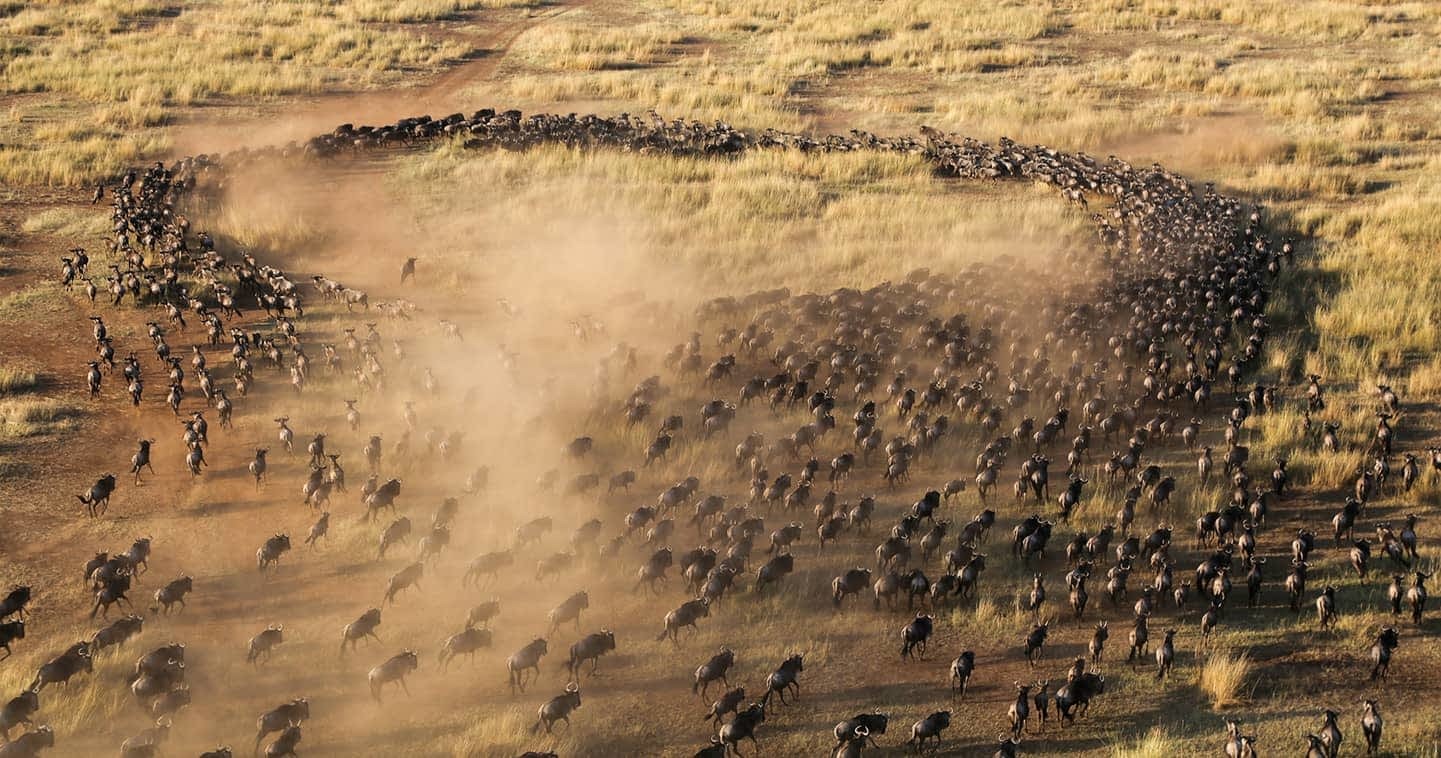
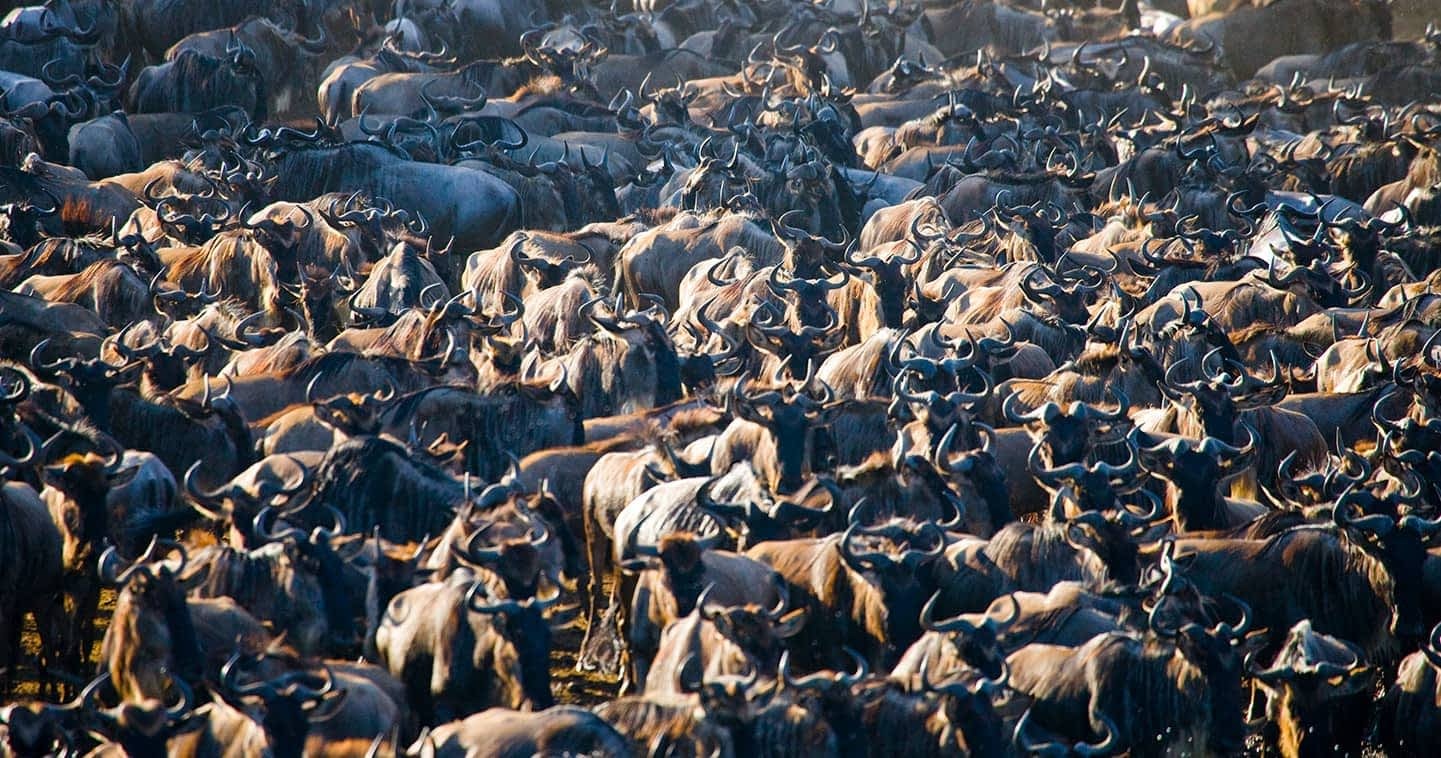
No wildlife spectacle on earth compares to it. More than 1.5 million wildebeest: along with 200,000 zebra and 300,000 gazelle: complete a relentless annual loop across the Serengeti and Maasai Mara in search of fresh grazing.
What Is the Great Migration?
The Great Migration is the largest mammal migration on earth: 1.5 million wildebeest, 200,000 zebra, and 300,000 Thomson's gazelle making a continuous, clockwise loop across the Serengeti ecosystem in Tanzania and the Maasai Mara in Kenya. It is not a single event: it is a year-round movement driven entirely by rainfall and the growth of fresh grass.
The herds cover roughly 3,000 kilometres annually. There is no beginning and no end: they are always moving. Your job is simply to be in the right place at the right time.
The Annual Cycle
January – March (Southern Serengeti: Calving Season): The wildebeest give birth to approximately 500,000 calves in a three-week window. This is one of the most dramatic events in nature: and it attracts enormous concentrations of predators. The short-grass plains around Ndutu and Ngorongoro are the setting.
April – May (Central Serengeti: Northward Push): The long rains begin and the herds start moving north. Less visited, but the landscape is lush and the long columns of animals stretching to the horizon are remarkable.
June (Western Corridor: Grumeti River Crossings): The first of the major river crossings, at the Grumeti River. Grumeti's resident crocodiles are enormous. Drama without the August crowds.
July – October (Northern Serengeti and Maasai Mara: Peak Drama): The herds enter the Maasai Mara. The famous Mara River crossings: where crocodiles wait in the churning water: happen repeatedly. This is what most people picture when they imagine the Great Migration. Book 9–12 months ahead.
November – December (Southward Return): The short rains fall and the herds begin moving back south toward the Serengeti. A quieter period with softer prices and excellent game viewing.
The River Crossings
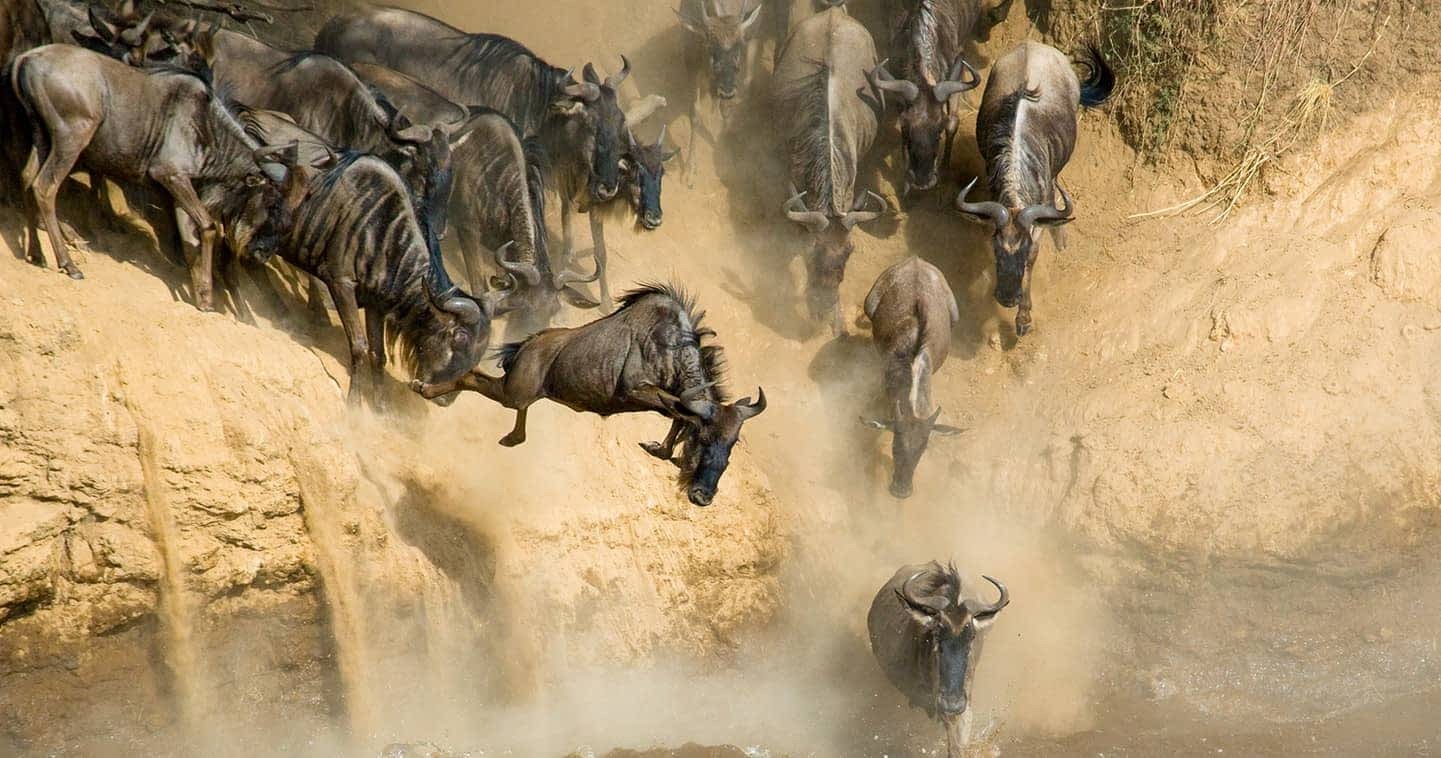
The Mara River crossings are the Migration's most iconic moments. Thousands of wildebeest gather on the riverbank, agitated and uncertain. A single animal eventually commits: and the herd pours over the bank in a chaotic, thundering mass. The crocodiles surge. The ones that make it clamber up the far bank and immediately start grazing, as if nothing happened.
Crossings are unpredictable. You may wait at a crossing point for two hours without action, then witness three crossings in a single morning. Your guide's knowledge of the herds' behaviour and positioning is everything. Our Maasai Mara guides have spent years reading these patterns.
Where to Stay
For the Mara crossings (July–October), camps positioned near the Mara River: or in the Mara Triangle on the western bank: give you the best access to crossing activity. In the Serengeti, the northern Serengeti (Lamai, Kogatende) mirrors the Mara experience from the Tanzanian side.
We work with a curated selection of camps across all Migration zones. Tell us your dates and we will match you to the right property.
Tips for First-Time Migration Visitors
- July–October is peak season: book accommodation 9–12 months ahead
- Fly in rather than drive: charter flights from Nairobi to the Mara take 45 minutes versus 6 hours by road
- Spend at least 4 nights in the Mara during peak season to maximise your chances of witnessing crossings
- Bring a camera with burst mode capability: crossings happen fast
- Be patient. The wildlife and weather are unpredictable: that is the point
- Consider the shoulder months (June or November) for lower prices and fewer vehicles at sighting points
Insider TipThe Great Migration is the main reason people put East Africa on their bucket list. But even if the crossings elude you: and occasionally they do: the concentration of wildlife in and around the Mara River area during peak season is so extraordinary that you will still have one of the best game-viewing experiences of your life.
Ready to Make It Real?
Our travel specialists will design a tailor-made itinerary around your exact dates and interests, at no obligation.
Get a Free Quote